
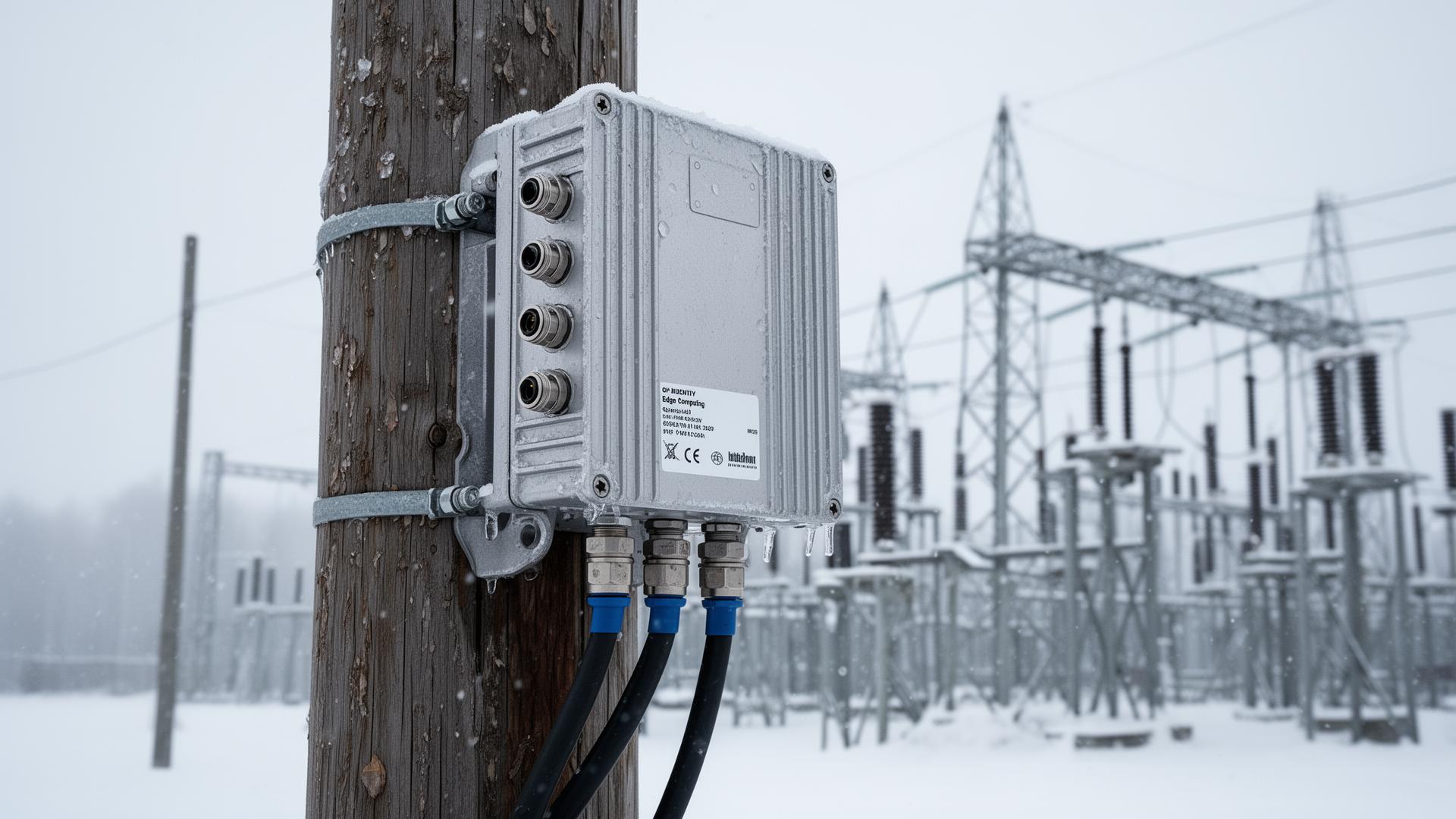
Rugged Outdoor Edge AI Computers
Zero-Maintenance in Extreme Latitudes
Engineered for +70°C full-load operation without thermal throttling. Featuring hardware-level self-healing and M12-grade sealing for truly unattended deployments in solar farms, highway corridors, and remote infrastructure.
Why Outdoor Edge Computing Fails—And How to Fix It
The promise of edge AI is simple: process data where it’s generated, eliminate cloud latency, and reduce bandwidth costs. But in outdoor deployments—highway corridors, solar farms, remote substations—the reality is far more complex. Most industrial PCs designed for factory floors simply cannot survive the thermal stress, vibration, and environmental exposure of truly outdoor installations.

Highway Corridor Analytics
Real-time traffic monitoring at +50°C ambient
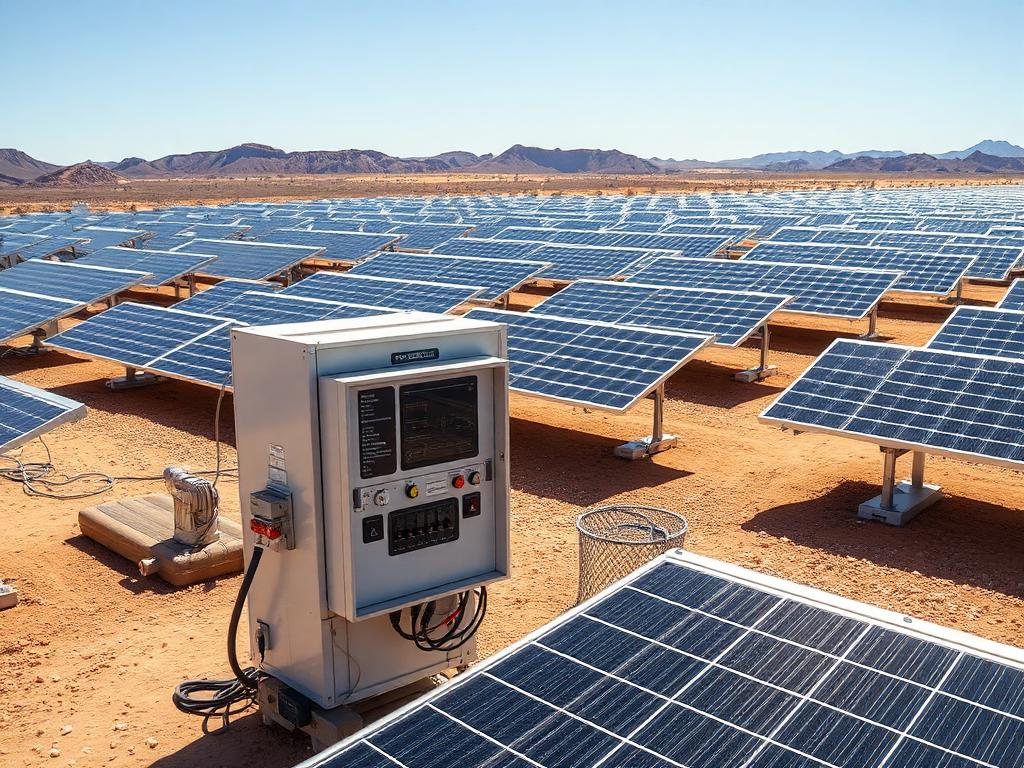
Solar Farm Monitoring
Unattended edge nodes in extreme desert heat
The Thermal Paradox
Edge AI workloads are computationally intensive. Running YOLOv8 inference at 30fps generates significant heat—exactly when you need the system most, in the summer sun where ambient temperatures already exceed 50°C. Standard industrial PCs respond by throttling CPU frequency, dropping your real-time vision system to unusable frame rates.
BITECH’s passive cooling unibody architecture eliminates this paradox. The die-cast aluminum chassis acts as a single thermal mass, conducting heat away from critical components without fans, without moving parts, and without the inevitable dust accumulation that kills fan-cooled systems within 18 months of outdoor deployment.
The Maintenance Trap
Every truck roll to a remote site costs $500-2000 in labor, equipment, and downtime. When you’re managing hundreds of edge nodes across a highway network or solar farm, even a 5% annual failure rate becomes financially devastating. Traditional industrial PCs weren’t designed for this reality—they assume on-site technicians and controlled environments.
BITECH’s “Unattended Reliability” architecture addresses this with hardware-level self-healing: independent watchdog circuits that monitor and recover individual subsystems, dual-flash A/B partitions for fail-safe OTA updates, and M12 aviation-grade connectors that survive vibration, moisture, and salt spray without disconnection.
The Total Cost of Ownership Reality
Hardware cost is 20% of your 5-year edge deployment budget. Maintenance, truck rolls, and downtime penalties consume the other 80%. When you select hardware optimized purely for acquisition cost, you’re optimizing for the wrong metric. BITECH designs for the 80%—for systems that run unattended for years, that survive the conditions standard industrial PCs simply cannot, and that recover automatically when failures occur.
The output is not just hardware. The output is operational continuity in environments where traditional computing fails.
The 70°C Challenge
Thermal Performance: Sustained vs. Throttled
CPU frequency retention (%) at ambient temperature
Why Thermal Throttling Breaks Outdoor AI
Standard industrial PCs begin throttling CPU frequency above 45°C ambient. In direct sunlight—where enclosure temperatures easily exceed 60°C—this means your vision inference drops from real-time to slideshow.
Passive Cooling Unibody
Die-cast aluminum chassis acts as a single thermal mass. No fans, no moving parts, no dust ingress points.
ASTM B117 Salt Spray Compliant
Anodized coating survives 500+ hours of salt fog exposure—critical for coastal and maritime deployments.
“At 70°C ambient, BITECH maintains 100% clock frequency while competitors have already dropped to 30% performance.”
Technical Deep Dive: Engineering for Extremes
Passive Thermal Architecture: The Unibody Advantage
Sustained Performance at +70°C Ambient
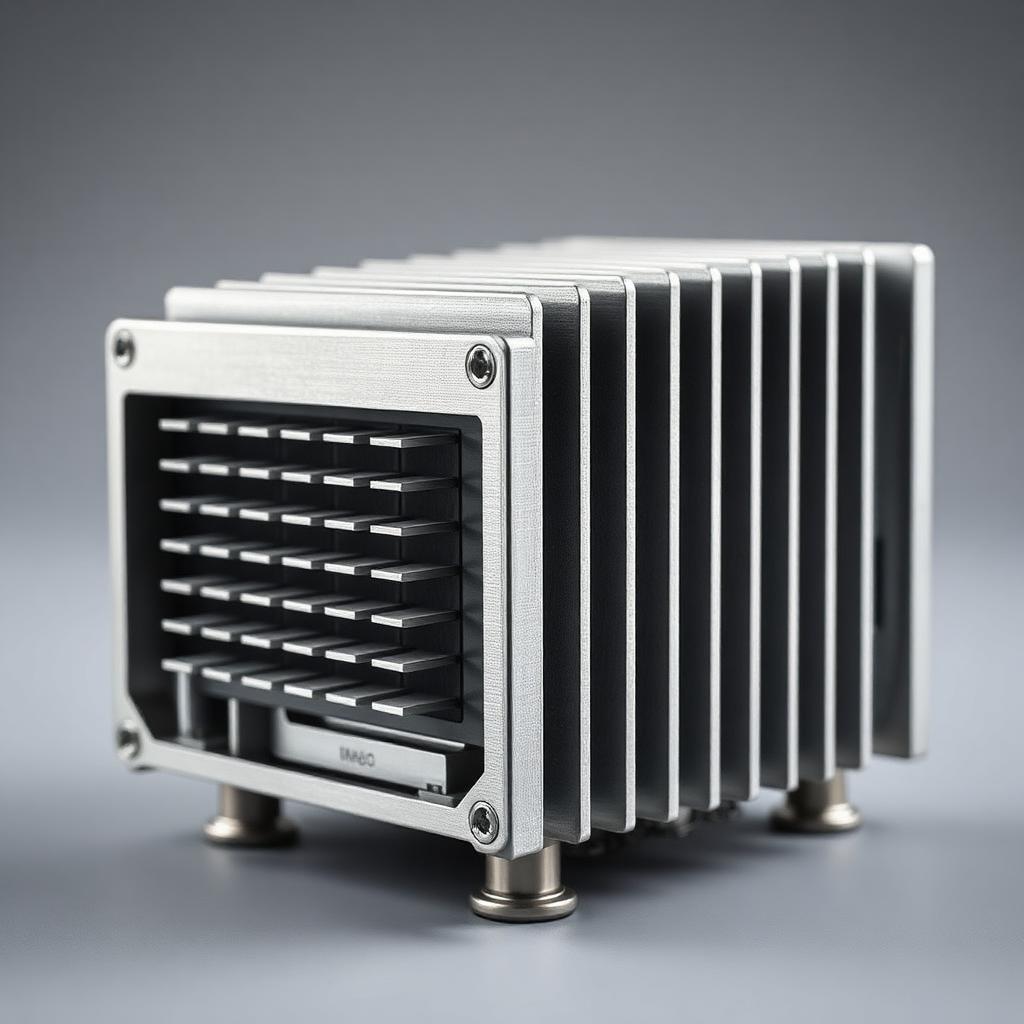
Traditional industrial PCs rely on internal fans to move heat from the CPU to external heatsinks. This approach fails catastrophically in outdoor environments: fans accumulate dust, bearings wear out, and the small thermal differential between internal and external air at high ambient temperatures makes convection cooling increasingly ineffective.
BITECH’s unibody thermal architecture takes a fundamentally different approach. The entire die-cast aluminum chassis functions as a single thermal mass—heat conducts directly from the CPU die through a copper heat spreader into the chassis walls, which then radiate heat to the environment. This design eliminates moving parts entirely while providing superior thermal performance at elevated ambient temperatures.
0
Moving Parts
25W
TDP Dissipation @ 70°C
100%
Clock Frequency Retention
The key insight is that in high-ambient environments, the temperature differential between internal components and external air shrinks dramatically—at 60°C ambient, a fan-cooled system has only 25°C of headroom before hitting thermal limits. The unibody design maximizes surface area for radiation and uses thermal interface materials (TIM) with thermal conductivity exceeding 5 W/mK to ensure efficient heat transfer from die to chassis.
Environmental Hardening: Beyond IP Ratings
ASTM B117, MIL-STD-810G, and Real-World Durability
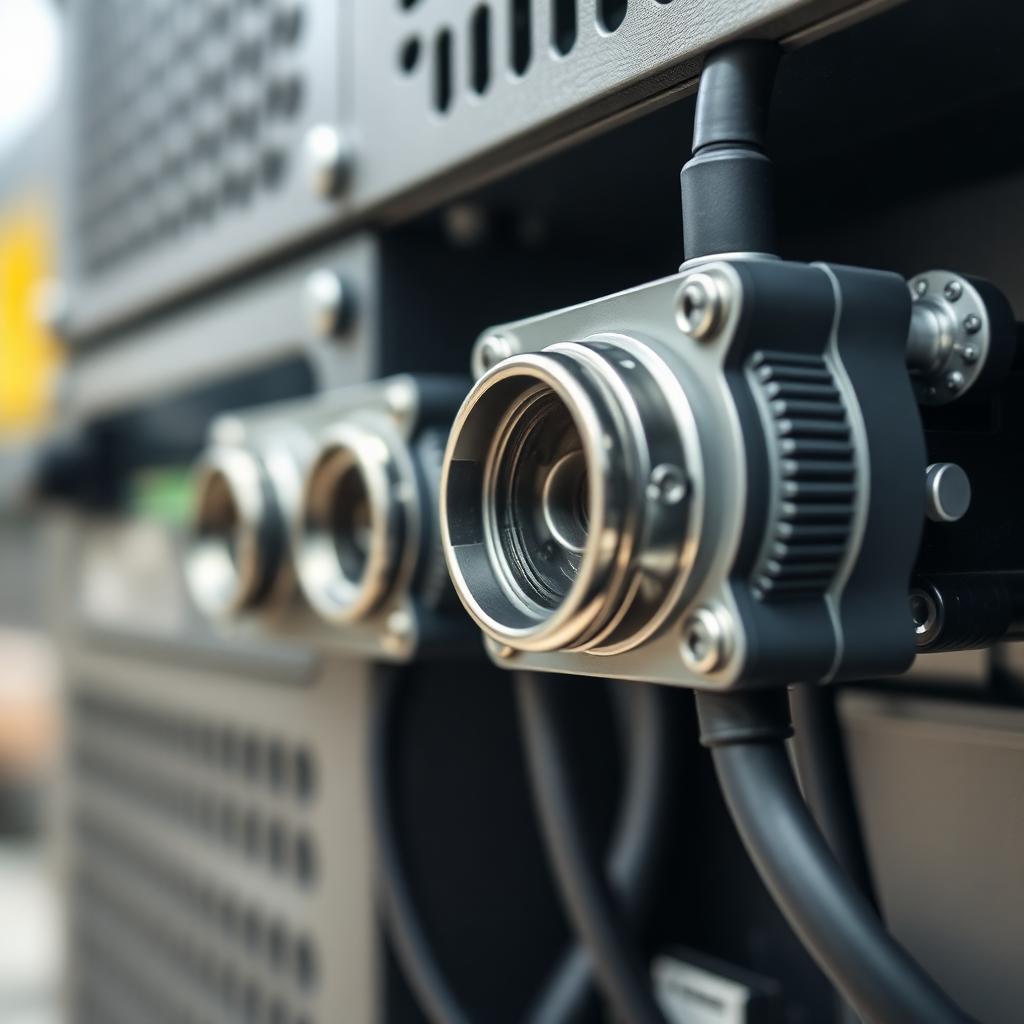
IP67 ratings measure water and dust ingress under controlled laboratory conditions. But real outdoor environments present additional challenges: salt spray in coastal installations, industrial pollutants near highways, UV degradation of seals and coatings, and vibration-induced connector loosening on pole-mounted systems.
Surface Protection
ASTM B117 salt spray testing validates coating durability against corrosive atmospheres. Our anodized aluminum chassis survives 500+ hours of continuous salt fog exposure—equivalent to 10+ years in coastal environments.
Vibration & Shock
MIL-STD-810G testing validates mechanical integrity under extreme conditions: 15G shock pulses, 5-500Hz vibration sweeps, and random vibration profiles that simulate vehicle-mounted and pole-mounted deployment scenarios.
Connector reliability receives special attention in outdoor designs. Standard RJ45 Ethernet jacks use spring-loaded tabs that can vibrate loose over time; in contrast, M12 aviation-grade connectors use screw-lock mechanisms that maintain connection integrity under continuous vibration. Our M12 Ethernet ports maintain IP67/68 sealing even when mated cables are exposed to thermal cycling from -40°C to +80°C.
Conformal coating on internal PCBs provides an additional layer of protection against humidity-induced failures. Even if moisture penetrates the enclosure seals over years of deployment, conformal coating prevents condensation from creating conductive paths between traces. This defense-in-depth approach ensures long-term reliability in environments where standard industrial electronics would fail within months.
Self-Healing Architecture: Hardware-Level Fault Recovery
Eliminating Truck Rolls Through Autonomous Recovery
Software watchdogs depend on the operating system being functional enough to respond. When a kernel panic occurs, when a driver deadlock freezes the system, or when a 5G modem enters an unrecoverable state, software watchdogs cannot intervene. BITECH implements hardware-level watchdog circuits that operate independently of the main CPU.
The hardware watchdog monitors heartbeat signals from critical subsystems: the main CPU, the NPU accelerator, the 5G modem, and external peripherals. If any subsystem fails to respond within configurable timeout periods, the watchdog can trigger targeted power-cycling of specific components without rebooting the entire system. A frozen 5G modem can be reset in 15 seconds while vision inference continues uninterrupted.
Dual-Flash A/B Partition Strategy
OTA firmware updates are essential for long-term deployments but carry significant risk—a failed update can “brick” a remote node, requiring an expensive truck roll. Our A/B partition architecture writes updates to an inactive partition while the system continues running from the active partition.
After the update completes, a verified reboot attempts to boot from the new partition. If boot verification fails—due to corrupted firmware, incompatible drivers, or configuration errors—the bootloader automatically falls back to the last-known-good image. This fail-safe mechanism ensures that no update, regardless of how badly it fails, can render a remote node permanently unrecoverable.
The combination of hardware watchdogs and A/B partitioning creates a self-healing system that can recover from virtually any software or peripheral failure without human intervention. In deployments with hundreds of edge nodes, this architecture reduces truck roll requirements by 80% or more compared to traditional industrial PCs.
The “Unattended Reliability” Matrix
Three pillars that eliminate truck rolls and on-site maintenance
Hardware Watchdog
An independent circuit monitors the health of 5G modems and NPU accelerators. If any module hangs or crashes, the watchdog triggers a targeted power-cycle without rebooting the entire system.
Dual-Flash A/B Partition
OTA updates write to the inactive partition. If the new firmware fails boot verification, the system automatically rolls back to the last-known-good image. No “bricked” nodes in the field.
M12 Connectivity
IP67/68 aviation-grade M12 connectors replace fragile RJ45 jacks. Screw-lock mechanisms prevent vibration-induced disconnection on poles, vehicles, and wind-exposed mounts.
AI Powerhouse: 32 TOPS NPU
AE-3588LBT delivers edge inference where cloud latency fails
TOPS
INT8 Inference
The RK3588-based AE-3588LBT integrates a dedicated Neural Processing Unit capable of running YOLOv8, ResNet-50, and custom ONNX models at the edge. No cloud round-trip, no bandwidth dependency, no privacy concerns.
Traffic Analytics
Real-time vehicle counting, speed estimation, and incident detection at highway junctions. Edge processing enables instant alerts without cloud dependencies.
- License plate recognition (ANPR)
- Wrong-way driver alerts
- Queue length estimation
Perimeter Security
Process multiple 4K IP camera streams locally. Eliminate massive bandwidth costs and privacy risks by avoiding raw video cloud uploads.
- Intrusion & loitering detection
- Facial recognition at gates
- Abandoned object identification
Critical Infrastructure
Run visual and thermal analytics at unmanned solar farms and power substations. Convert analog meter readings to digital data at the edge.
- Analog gauge/dial digitization
- Thermal anomaly (flare-up) detection
- Wildlife intrusion monitoring
The "Hardened" Comparison
| Specification | BITECH Outdoor Edge | Generic Outdoor PC |
|---|---|---|
| Operating Temperature | −40°C to +80°C Full performance at 70°C | −20°C to +60°C |
| MTBF | >100,000 Hours | ~50,000 Hours |
| Vibration Resistance | MIL-STD-810G 15G shock, 5-500Hz sweep | IEC 60068-2-6 |
| Self-Healing | Hardware-Level Watchdog | Software only |
| Ingress Protection | IP67/68 + M12 | IP65 + RJ45 |
| Surface Coating | ASTM B117 Salt Spray 500+ hour rated | Standard powder coat |
Deploy Zero-Maintenance Edge Intelligence
If your deployment requires thermal resilience beyond 60°C, unattended operation for years, and industrial-grade AI inference—we can help design the right solution path.
Share with us:
- Deployment environment (temp range, IP rating)
- AI workload requirements (model type, FPS)
- Connectivity needs (5G, Ethernet, serial)
You'll receive:
- Hardware recommendation + thermal analysis
- Integration checklist + mounting guidance
- Pilot program roadmap