
Industrial Robotics
Industrial Robot Vision
Controllers & Solutions
Industrial Machine Vision Controllers for Vision-Guided Picking, Multi-Camera Inspection & Edge AI Defect Detection.
Enable precision robotic automation with machine vision controllers engineered for PLC integration, real-time coordinate transformation, and 5-7 year industrial lifecycle support. Our platforms achieve 99.8% picking accuracy with sub-15ms response latency—validated across automotive, semiconductor, and logistics deployments.
99.8% Picking Accuracy — Sub-millimeter vision-guided positioning for robotic arms
<15ms Response Latency — Real-time image processing with PLC synchronization
Multi-Camera Fusion — Support for 2D, 3D, and thermal imaging in a unified pipeline
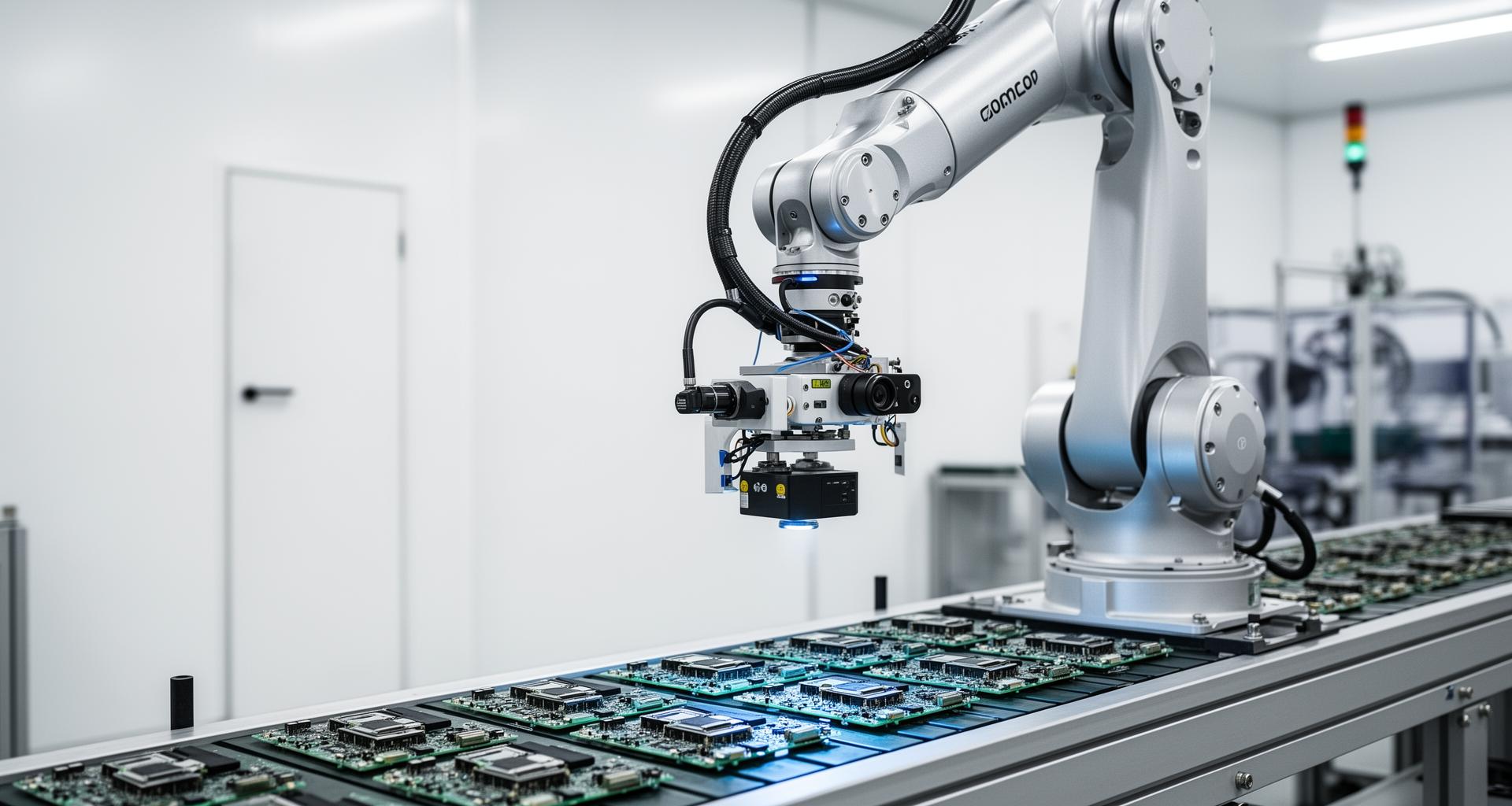
What is Robot Vision?
Robot vision (also called robotic machine vision) is an integrated system that enables industrial robots to see, interpret, and act on visual information. It combines industrial cameras, specialized lighting, a machine vision controller, and coordinate transformation algorithms to guide robotic arms with sub-millimeter precision.
Unlike standalone inspection systems, robot vision is tightly coupled with motion control—translating pixel coordinates to real-world robot positions in real-time. This enables applications like vision-guided picking, assembly verification, and multi-camera inspection at production-line speeds.
The core functions of robot vision fall into three categories: Guidance (locating and picking objects from random positions), Inspection (verifying assembly, detecting defects, reading codes), and Measurement (dimensional verification with micron-level accuracy).
How Robot Vision Works
Step 1: Image Acquisition
Industrial cameras (GigE Vision, USB3 Vision) capture high-resolution images triggered by PLC or encoder signals. Lighting controllers synchronize strobe timing within microseconds. Camera selection depends on the application—area scan cameras for stationary pick-and-place, line scan for continuous web inspection, or 3D structured light for depth perception. Typical capture rates range from 5 to 100+ frames per second with hardware trigger support.
Step 2: Preprocessing & Detection
The machine vision controller performs real-time preprocessing: geometric correction, noise filtering, and region-of-interest extraction. Deep learning or traditional algorithms then detect features, defects, or objects. Common techniques include edge detection, blob analysis, CNN-based defect detection, pattern matching, and OCR. Processing must complete within the production cycle time—often under 50ms.
Step 3: Coordinate Transformation
Vision-to-robot calibration matrices convert pixel coordinates to robot world coordinates. The system calculates optimal pick/place poses with collision avoidance constraints. This step requires hand-eye calibration (establishing the geometric relationship between camera and robot tool center point), 3D pose estimation, and path planning integration.
Step 4: Robot Execution
Coordinate data transmits to PLC/robot controller via industrial protocols (EtherCAT, PROFINET, TCP/IP). The robot arm executes precision motion with closed-loop feedback. Data transmission latency should be under 5ms for real-time applications. The system handles 6-axis motion control and implements error recovery for pick failures or unexpected obstacles.
System Architecture
A complete robot vision system integrates four key subsystems: Camera & Lighting (industrial cameras with synchronized strobe controllers), Vision Controller (industrial PC running vision software like HALCON, VisionPro, or OpenCV), PLC / Robot Controller (motion control via EtherCAT, PROFINET, or proprietary protocols), and Actuator / Gripper (robot arm with appropriate end-effector for pick/place operations).
The vision controller sits at the center of this architecture, receiving raw images from cameras, processing them to extract coordinates and quality metrics, and transmitting results to the motion control layer. Isolated I/O prevents ground loops between the vision and control domains. Camera interfaces typically use GigE, USB3, or CoaXPress depending on bandwidth requirements.
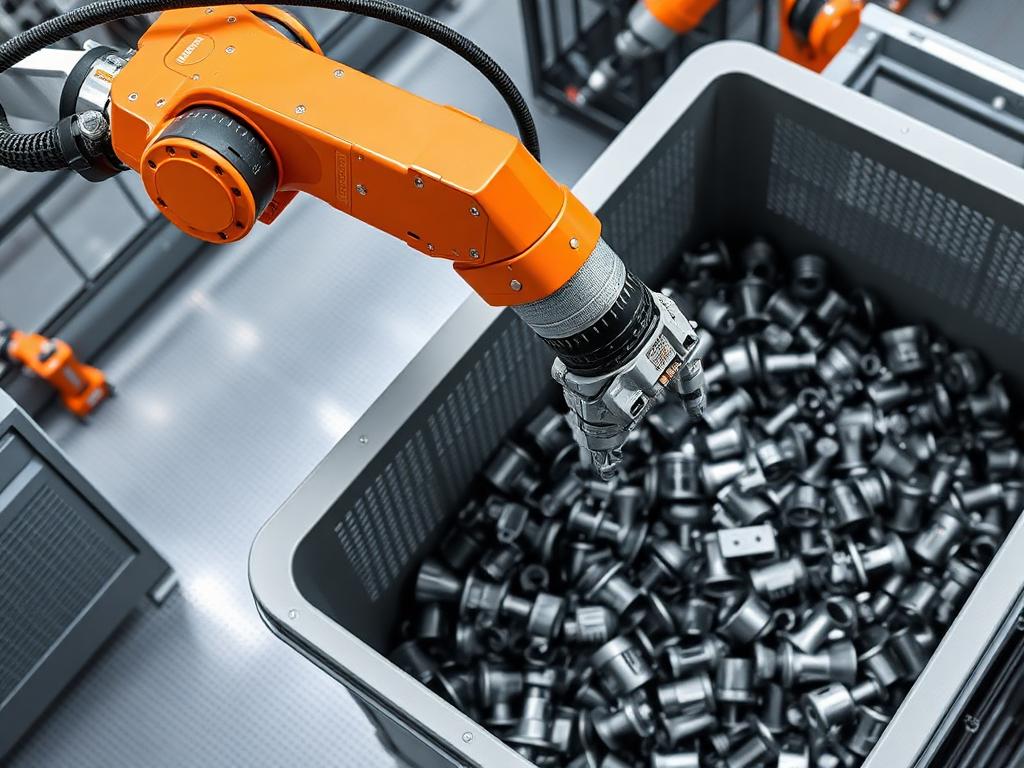
Vision-Guided Bin Picking
Random bin picking is one of the most demanding robotic vision applications. Parts arrive in unstructured heaps, creating occlusion, varying orientations, and reflection challenges. Traditional 2D vision fails to determine pick order or collision-free trajectories.
Our multi-camera inspection systems combine structured light 3D sensors with high-speed 2D cameras. The machine vision controller processes point clouds in real-time, segmenting individual objects and calculating optimal 6-DoF grasp poses. Edge AI acceleration handles deep learning models for object classification, while isolated I/O ensures microsecond-level synchronization between vision triggers and robot motion.
Measured Outcomes:
- • 95%+ pick success rate on reflective metals
- • Cycle time reduction from 8s to 3.5s per pick
- • Compatible with FANUC, KUKA, ABB, and Universal Robots
Multi-Camera Assembly Verification
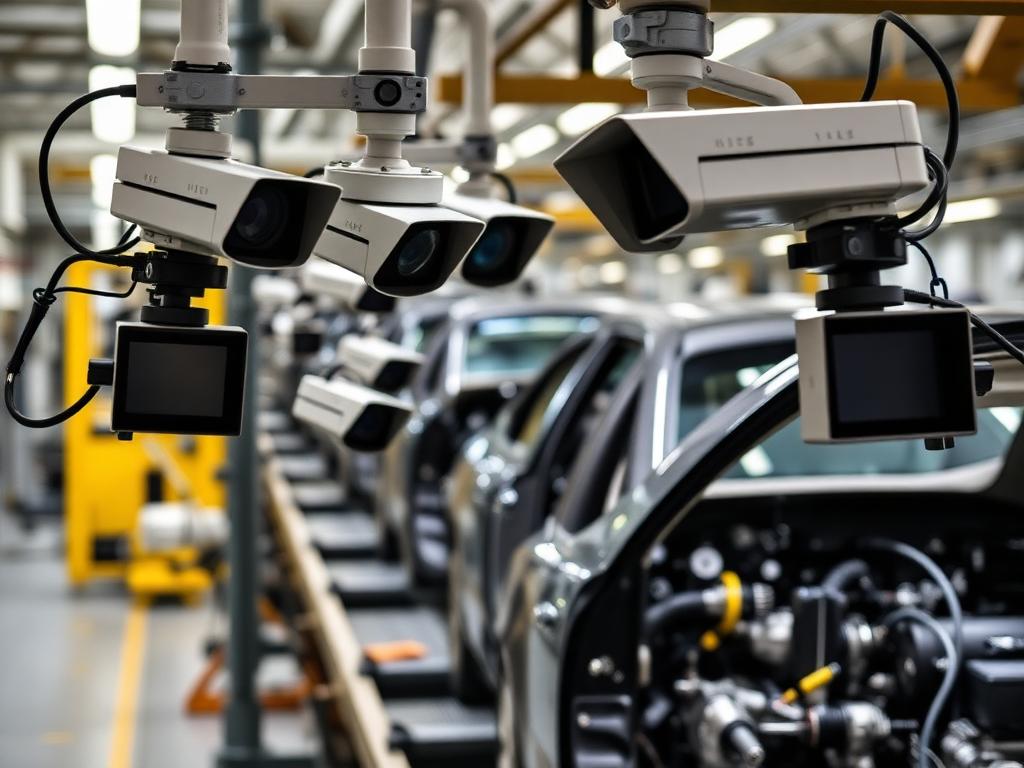
Automotive and electronics assembly lines require 100% defect detection at speeds exceeding 60 parts per minute. A single inspection station may need 4-8 cameras covering different angles, each requiring synchronized triggering and data fusion.
The robotic machine vision platform integrates multiple GigE Vision cameras with PCIe frame grabbers, ensuring jitter-free capture across all viewpoints. Centralized processing on an industrial GPU handles parallel inference—verifying component presence, measuring
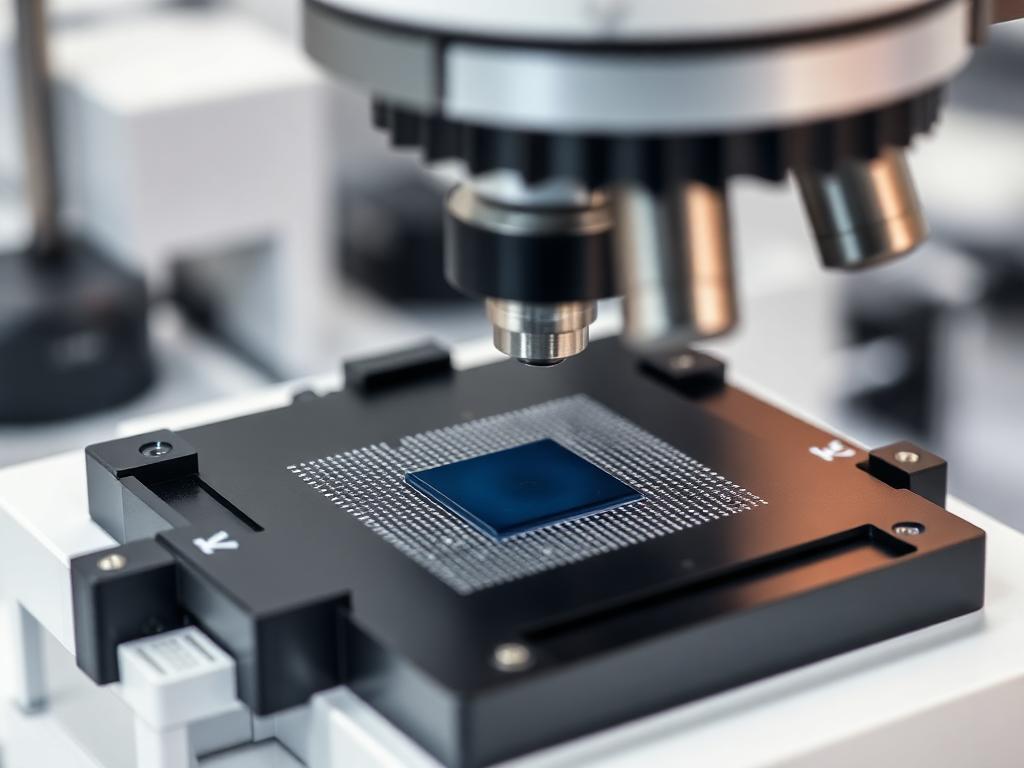
Precision Defect Detection for Semiconductor
Semiconductor and PCB manufacturing demands sub-micron defect detection across wafer or board surfaces. Inspection must identify scratches, contamination, missing solder, and misalignment without false positives that waste yield.
High-resolution line scan cameras paired with precision motion stages capture gigapixel images of entire surfaces. The edge AI industrial PC runs specialized deep learning models trained on millions of defect samples. Galvanically isolated interfaces prevent ground loops from introducing noise into sensitive measurements.
Measured Outcomes:
- • 0.5μm defect detection on 300mm wafers
- • Processing throughput: 50+ wafers/hour
- • Integration with SECS/GEM for equipment communication
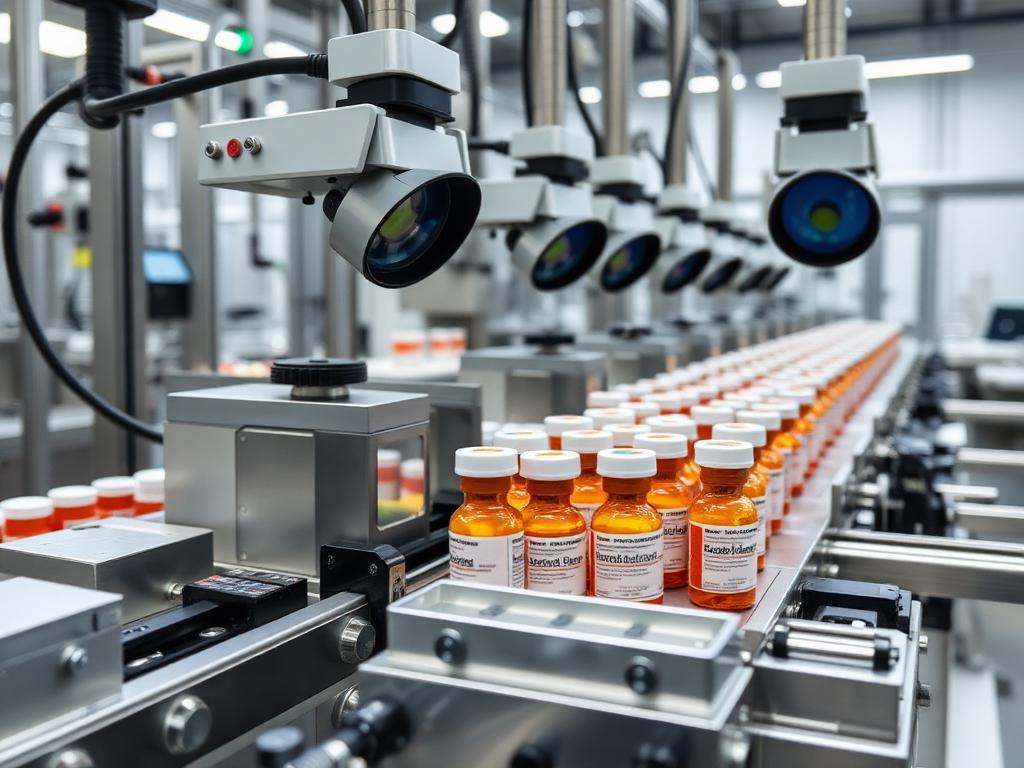
Pharmaceutical Packaging Inspection
Pharmaceutical lines must verify fill levels, cap presence, label accuracy, and serialization codes at speeds exceeding 400 bottles per minute. Regulatory compliance (FDA 21 CFR Part 11) demands complete audit trails and validated inspection algorithms.
Multi-lane inspection systems deploy dedicated cameras per station: fill-level sensing via backlighting, cap detection with 3D profiling, and OCR verification for date codes and lot numbers. The machine vision controller logs every inspection result with timestamp and image archive, maintaining compliance-ready data integrity.
Measured Outcomes:
- • 400+ BPM inspection throughput per lane
- • Complete FDA 21 CFR Part 11 audit trail
- • Automatic recipe changeover for SKU flexibility