
Table of Contents
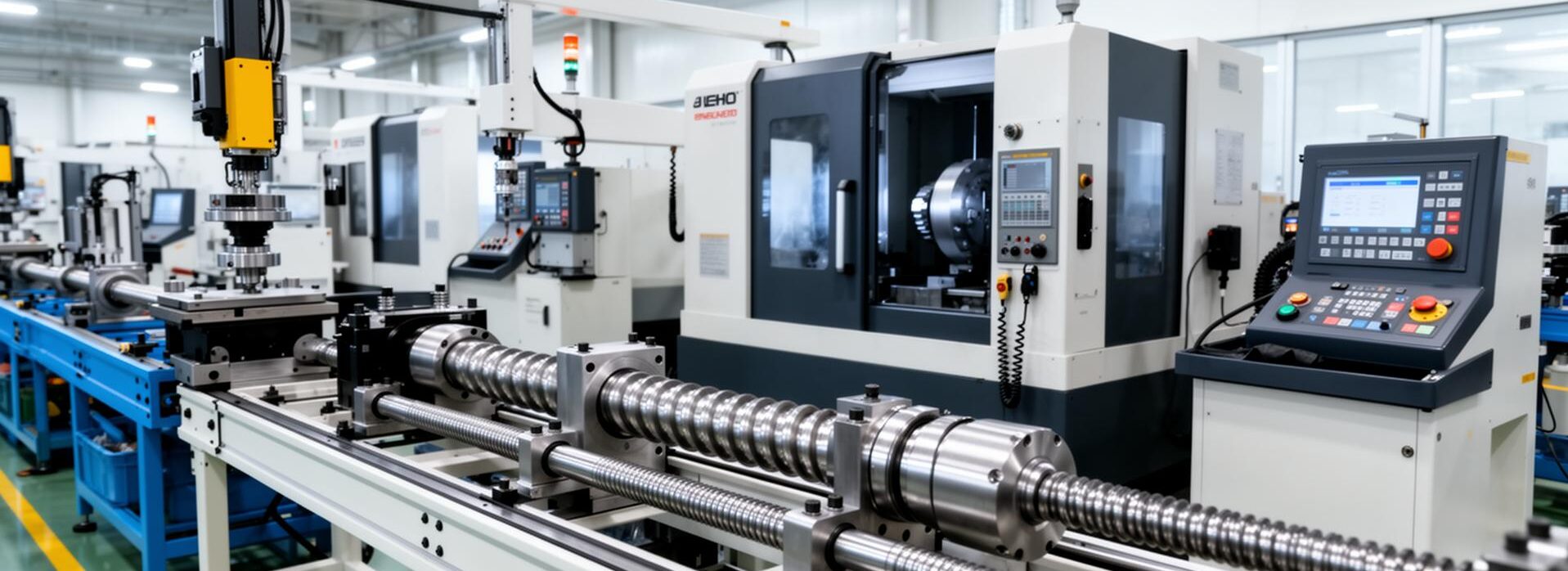
From Prototype to Mass Production: Zero-Defect Planetary Roller Screw Manufacturing
Stop guessing on assembly tolerances. Our end-to-end control and EOL testing solution guarantees micron-level consistency, proven endurance, and 100% traceability for humanoid robot actuators.
Planetary roller screws and inverted planetary roller screws are emerging as the core transmission components for humanoid robot actuators, electric linear actuators, and precision motion systems. As demand scales from prototype to mass production, the challenge shifts from component design to industrialization capability—proving consistency, validating lifetime, and building the quality evidence that customers require before committing to volume orders.
This solution addresses the complete production and validation chain: from assembly station control through EOL functional testing, endurance validation, and traceability data systems. The goal is not just to build actuators, but to build proof—curves, trends, and data that demonstrate quality at scale.
Faster Ramp-Up
Shorten tuning and validation cycles with systematic commissioning workflows and pre-validated recipes that reduce time from installation to stable production.
Better Consistency
Reduce batch-to-batch variation with closed-loop process control, real-time monitoring, and systematic acceptance criteria that catch deviations early.
Quality Proof
Generate the curves, trends, and traceability evidence that customers demand—thrust curves, efficiency data, thermal stability proof, and archived test records.
Quick Input Checklist
The Race to Scale: Quality is the New Bottleneck
Designing a working planetary roller screw is no longer your competitive edge—manufacturing it reliably at scale is.
As top humanoid robotics firms lock in their Tier-1 supply chains, relying on manual assembly and ad-hoc testing guarantees you will lose the contract. The hidden costs aren’t in the equipment; they are in delayed ramp-ups, failed customer audits, and catastrophic warranty claims.
Build the automated validation infrastructure your customers demand—before the supply chain window closes.
For decision-makers: The hidden cost is not equipment price—it’s delay, re-validation, and warranty risk. Programs that invest in proper infrastructure upfront avoid the compounding costs of quality escapes and customer qualification failures.
Key Challenges
The Assembly Trap
Individual components pass inspection, but the assembled unit fails. Micron-level deviations in preload force and alignment compound instantly, ruining dynamic performance.
Assembly Tolerance Chain
Individual components may pass inspection, but the assembled unit tells a different story under real load conditions. Preload force variations, lubrication distribution, and alignment errors create a tolerance chain that determines actual performance. Static dimensional checks cannot predict dynamic behavior.
The “Prove It” Barrier
Your prototype works, but robotics customers demand hard proof: thrust curves, thermal stability data, and million-cycle endurance validation. No data, no volume orders.
The Warranty Nightmare
When a field actuator fails, slow root-cause analysis damages your reputation. Without SN-linked process data and archived test curves, teams spend weeks investigating what should take hours.
What This Means for Executives
These challenges compound into business risk: delayed ramp-up, inconsistent quality, customer rejections, and slow root-cause response when issues occur. The solution is not more inspection—it’s systematic process control, validation infrastructure, and traceability that makes quality visible and actionable.
What We Deliver
Concrete deliverables you will receive as part of the solution engagement.
Line Architecture Blueprint
Complete system layout covering assembly stations, EOL testing, endurance validation, and data infrastructure with clear interfaces and material flow.
Sensor & Measurement Plan
Recommended sensor selection for force, torque, displacement, temperature, current, and vibration/noise—matched to your accuracy and throughput requirements.
Test Metrics Definition
Structured definition of all test parameters: thrust curves, backlash, friction torque, efficiency, thermal rise, NVH signatures—with measurement protocols.
Pass/Fail Rules Template
Curve-based acceptance criteria beyond simple OK/NG—including slope limits, trend consistency, and anomaly detection thresholds.
Traceability Data Schema
SN binding structure, process parameter fields, curve archiving format, and query interfaces for root-cause analysis and customer reporting.
Commissioning Checklist
Step-by-step tuning workflow from sensor calibration through recipe validation to production release—reducing ramp-up time.
SCADA/MES Integration Outline
Optional integration architecture covering data exchange protocols, quality gate handshakes, and dashboard export formats.
SPC Dashboard Format
Export specifications for statistical process control—control charts, capability indices, trend reports for continuous improvement.
Solution Overview
Assembly Station Control
Precision control of preload force, displacement positioning, and torque application with real-time monitoring and anomaly detection for consistent assembly quality.
EOL Functional Testing
Curve-based acceptance testing covering thrust, backlash, friction, efficiency, thermal rise, and NVH—generating quality fingerprints for every unit.
Endurance Validation
Long-cycle reliability testing with controlled load profiles, multi-station parallelism, automated alarms, and comprehensive trend logging.
Traceability & SPC
SN-linked data archiving, rule-based release gating, root-cause query tools, and SPC exports for process control and customer reporting.
This is not a single machine—it’s a closed-loop production and validation system. Each module addresses specific bottlenecks in the roller screw industrialization path, from assembly consistency through endurance proof to customer-ready traceability. The integration between modules is as important as the modules themselves.
System Architecture
The system architecture follows a layered approach where sensors capture physical parameters, the control layer executes motion and process logic, test stations apply standardized evaluation sequences, the data layer archives results with SN binding, and optional SCADA/MES integration provides enterprise visibility.
The control layer can be implemented as IPC-based (for complex curve analysis and data processing), PLC-based (for proven real-time motion control), or hybrid (combining both approaches). Architecture selection depends on test complexity, throughput requirements, and existing infrastructure.
Typical Signals & Measurements
Integration Options
Core Modules
Each module addresses specific production bottlenecks and mass production requirements. The modules work together as an integrated system, with data flowing from assembly through testing to traceability.
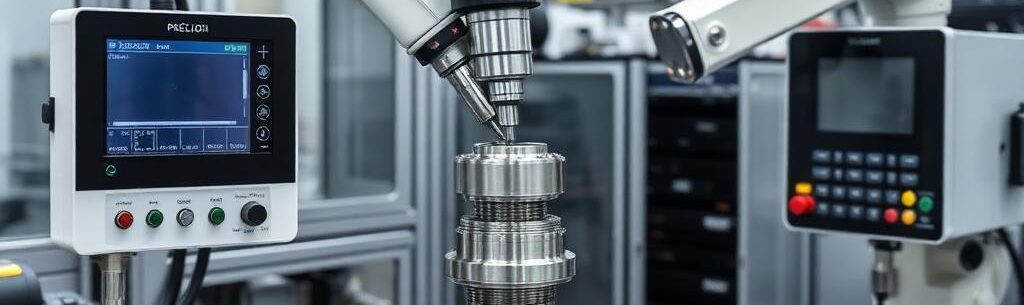
Closed-Loop Assembly Control
Assembly station control addresses the critical phase where individual components—roller screw assemblies, housings, bearings, seals—come together into a functional unit. This phase determines the final performance characteristics: preload setting affects backlash and friction; displacement positioning determines alignment; torque application during fastening influences long-term stability.
The control system provides closed-loop regulation of assembly forces and positions, with real-time monitoring of torque and current trends. Anomaly detection algorithms flag deviations from expected patterns—a torque spike during insertion, abnormal current draw during positioning—enabling immediate intervention before defects propagate downstream.
Key Capabilities
- Preload force control with position feedback
- Displacement positioning to micron resolution
- Torque/current trend monitoring
- Anomaly detection and alarming
- Repeatable sequence execution
- Recipe management for product variants
Outcome: Reduced assembly variation, faster setup for new variants, early defect detection, and traceable assembly parameters for every unit.
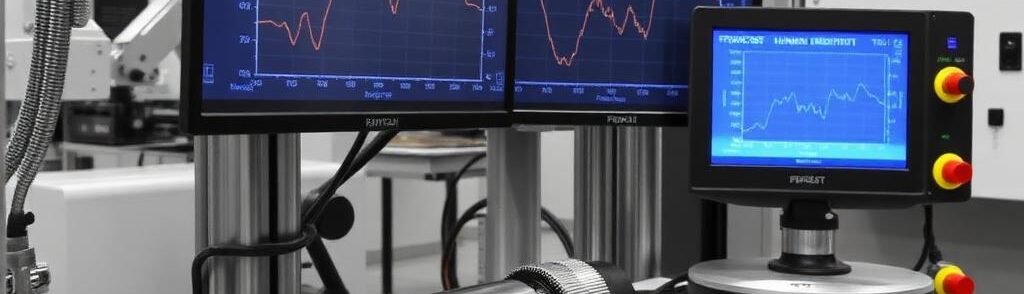
EOL Functional Testing
End-of-line functional testing generates the quality fingerprint that determines whether a unit ships or gets reworked. Unlike simple go/no-go checks, curve-based acceptance evaluates the shape and characteristics of performance curves—thrust vs. displacement, friction torque trend, efficiency at multiple operating points, thermal rise rate, and NVH signature.
Each test parameter targets specific failure modes. Thrust curves reveal assembly quality and preload setting; friction trends indicate lubrication and internal consistency; efficiency curves demonstrate real-world performance under load; thermal rise monitoring catches units that will overheat in continuous duty; NVH analysis detects internal damage invisible to force measurements.
Test Coverage
Thrust Test
Force vs. displacement curve across full stroke
Backlash Verification
Bi-directional measurement under controlled load
Friction Torque
Trend analysis at multiple speed points
Efficiency Curve
Output/input ratio across operating range
Thermal Rise
Temperature trend during short-cycle stress test
NVH Signature
Acoustic and vibration pattern analysis
Example Test Outputs
- Complete curve data (archived with SN)
- Pass/Fail result with rule-based reasoning
- Failure reason codes for rejected units
- Archived test report (PDF/database record)
Outcome: Comprehensive quality gate with curve evidence, reduced customer rejections, and archived proof for warranty defense.
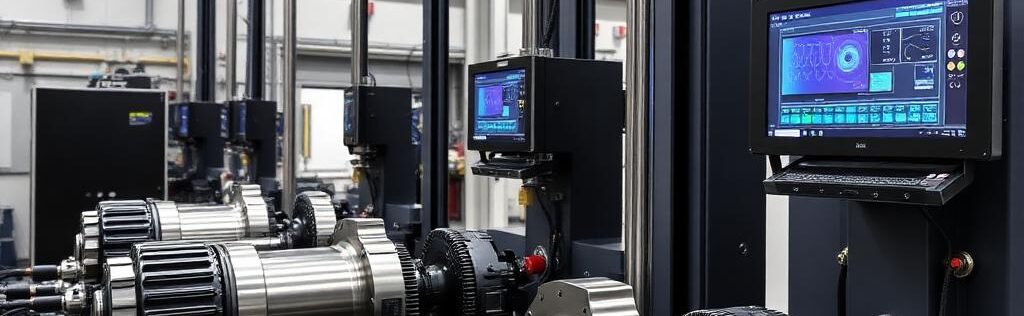
Endurance Validation
Endurance validation is often the final gate before customer qualification. Humanoid robot actuator customers require proof that units will survive their specified lifetime—hundreds of thousands or millions of cycles under representative load conditions. Without this evidence, even units that pass EOL testing cannot be qualified for volume orders.
Endurance test rigs apply controlled load profiles over extended periods, counting cycles, monitoring performance degradation, and logging events. Multi-station parallel operation provides the throughput needed to validate batch samples within reasonable timelines. Automated alarm systems pause tests on anomaly detection, preserving failure evidence for analysis.
Endurance Rig Features
- Controlled load application (constant or profiled)
- Precise cycle counting with event logging
- Multi-station parallel operation
- 24/7 unattended operation capability
- Automated alarm and pause-on-fault
- Periodic curve snapshots for trend analysis
- Integration with traceability system
- Remote monitoring and status alerts
Outcome: Documented lifetime evidence for customer qualification, early identification of wear-out failure modes, reduced customer-side failures and warranty claims.

Traceability & SPC
Traceability transforms production data from isolated records into a queryable knowledge base. Every unit carries its complete history: assembly parameters, test curves, pass/fail results, operator actions, and timestamps. When field issues occur, this data enables rapid root-cause analysis—identifying whether problems trace to specific batches, assembly stations, or time periods.
SPC (Statistical Process Control) builds on traceability by monitoring parameter trends across production. Control charts detect process drift before it causes out-of-spec product; capability indices quantify consistency; trend analysis predicts when intervention is needed. Together, traceability and SPC enable both reactive problem-solving and proactive process improvement.
Typical Traceability Fields
Traceability Features
- SN binding at each station
- Process parameter logging
- Curve archiving with SN linkage
- Rule-based release gating
- Query interface for analysis
SPC Capabilities
- Control charts (X-bar, R, etc.)
- Capability indices (Cp, Cpk)
- Trend analysis and alerts
- Dashboard exports
- Customer report generation
Outcome: Fast root-cause analysis, customer audit readiness, continuous improvement through data-driven insights, and reduced warranty exposure.
Business Value
For founders, VPs, and decision-makers, the value of production control and validation infrastructure extends beyond quality metrics. It directly impacts ramp-up speed, customer qualification timelines, warranty exposure, and the ability to scale operations as demand grows.
Accelerate Time-to-Market:
Pre-validated recipes and systematic commissioning workflows slash ramp-up time from months to weeks.
Eliminate Batch Drift
Real-time SPC and closed-loop control lock in consistency across different shifts and production lots.
Slash Re-Validation Costs
Unbroken traceability means you isolate and fix root causes instantly—avoiding full-lot re-testing.
Win Tier-1 Contracts
Audit-ready dashboards and empirical endurance data give your sales team the ultimate proof to close major robotics OEMs.
Deployment Path
Requirements
Define specifications, volume, quality metrics, and integration needs
Architecture
Design station layout, control topology, and data infrastructure
Integration
Implement hardware, software, and communication interfaces
Rule Setup
Configure test sequences, pass/fail criteria, and traceability schema
Pilot Stabilization
Tune parameters, validate throughput, and refine acceptance rules
Volume Scaling
Expand capacity, replicate proven configurations, enable SPC monitoring
Frequently Asked Questions
Can the test rig accommodate different roller screw sizes as our product line expands?
Yes. Our systems feature a modular hardware architecture and recipe-driven software. When introducing a new variant, you simply swap the quick-change mechanical fixtures and load the corresponding pre-validated test recipe. This protects your initial capital investment and ensures your production line scales seamlessly with your catalog.
How does the system integrate with our existing factory MES/SCADA infrastructure?
Our control layer (IPC/PLC) is built on open industrial standards (OPC-UA, REST API, Profinet). We don't create data silos. Instead, we map station events directly to your MES, enabling automatic Serial Number (SN) binding, real-time quality gate handshakes, and instant dashboard synchronization across your enterprise.
Are the test outputs and SPC dashboards sufficient for Tier-1 robotics customer audits?
Absolutely. Tier-1 OEMs don't want just "Pass/Fail" logs—they want empirical proof. Our system archives high-resolution thrust curves, thermal trends, and NVH signatures permanently bound to each serial number. This generates the exact evidence and capability indices (Cp, Cpk) required to pass stringent robotics vendor qualifications.
Endurance testing requires millions of cycles. How do you prevent a production bottleneck?
Endurance validation is completely decoupled from End-of-Line (EOL) functional testing. We design multi-station parallel endurance rigs engineered for 24/7 unattended operation. With automated pause-on-fault and periodic curve snapshots, you can continuously validate statistical batch samples without slowing down your primary assembly and EOL throughput.
What is the typical timeline from order placement to stable volume production?
While hardware lead times vary based on customization, our true advantage is the commissioning phase. By utilizing our standardized sensor arrays and pre-written control logic, we reduce on-site tuning and stabilization time by up to 40%. You move from installation to full-rate production weeks faster than building a system from scratch.
How do you handle maintenance and troubleshooting if the production line goes down?
Downtime is the enemy of ROI. Our systems feature built-in remote diagnostics and anomaly logging. If a fault occurs, our engineering team can securely access the IPC layer remotely to analyze sensor data and control logs, often identifying the root cause in minutes without waiting for an on-site technician to be deployed.
Stop Troubleshooting. Start Scaling.
Don't let validation bottlenecks delay your time-to-market. Send us your target load, stroke, speed, and takt time requirements to secure your supply chain position.
- Custom IPC-Based Architecture Blueprint
- Sensors & MES Integration Strategy
- 48-Hour Engineering Response