
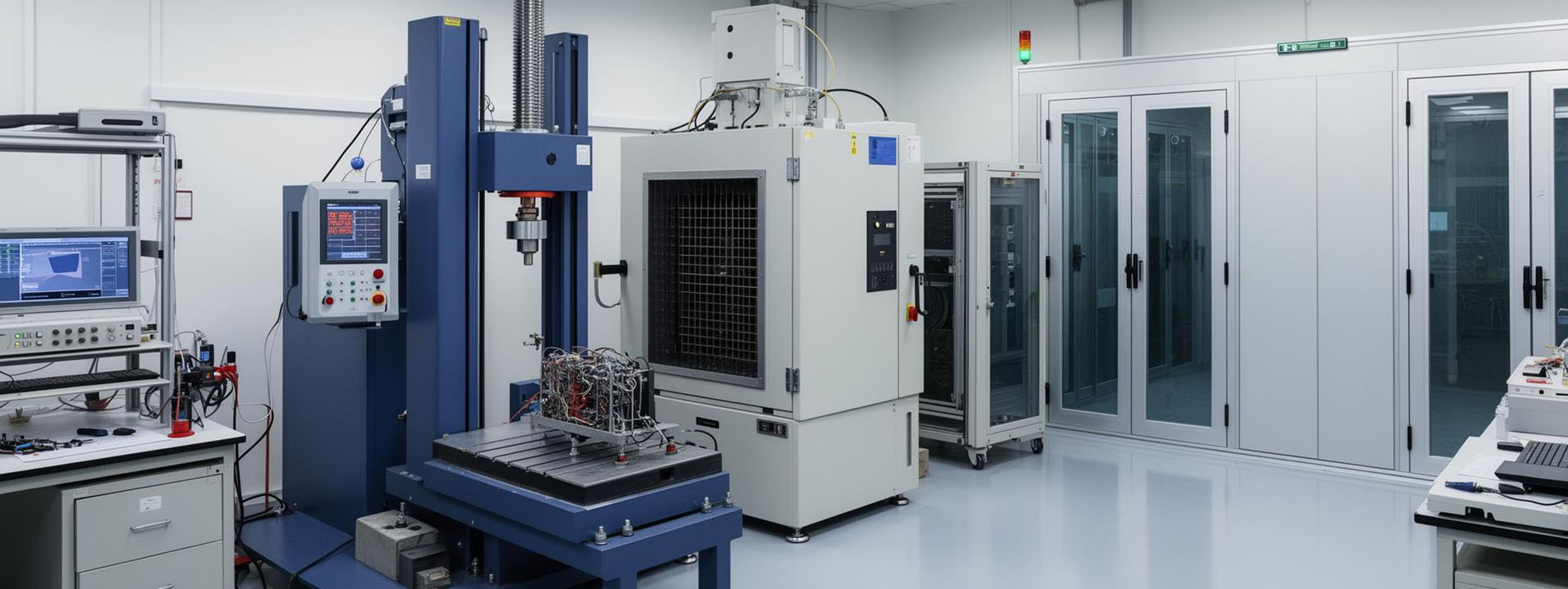
Lab Equipment Overview
Thermal Chambers
4× Temperature/Humidity Chambers
-70°C to +180°CVibration System
Electrodynamic Shaker
Up to 100G PeakEMC Pre-Compliance
Shielded Chamber + Spectrum Analyzer
9kHz – 6GHzPower Analyzers
Efficiency & Ripple Measurement
DC – 1MHz BandwidthThe Testing Pillars
Three domains of validation ensure every unit meets industrial-grade reliability standards before shipping.
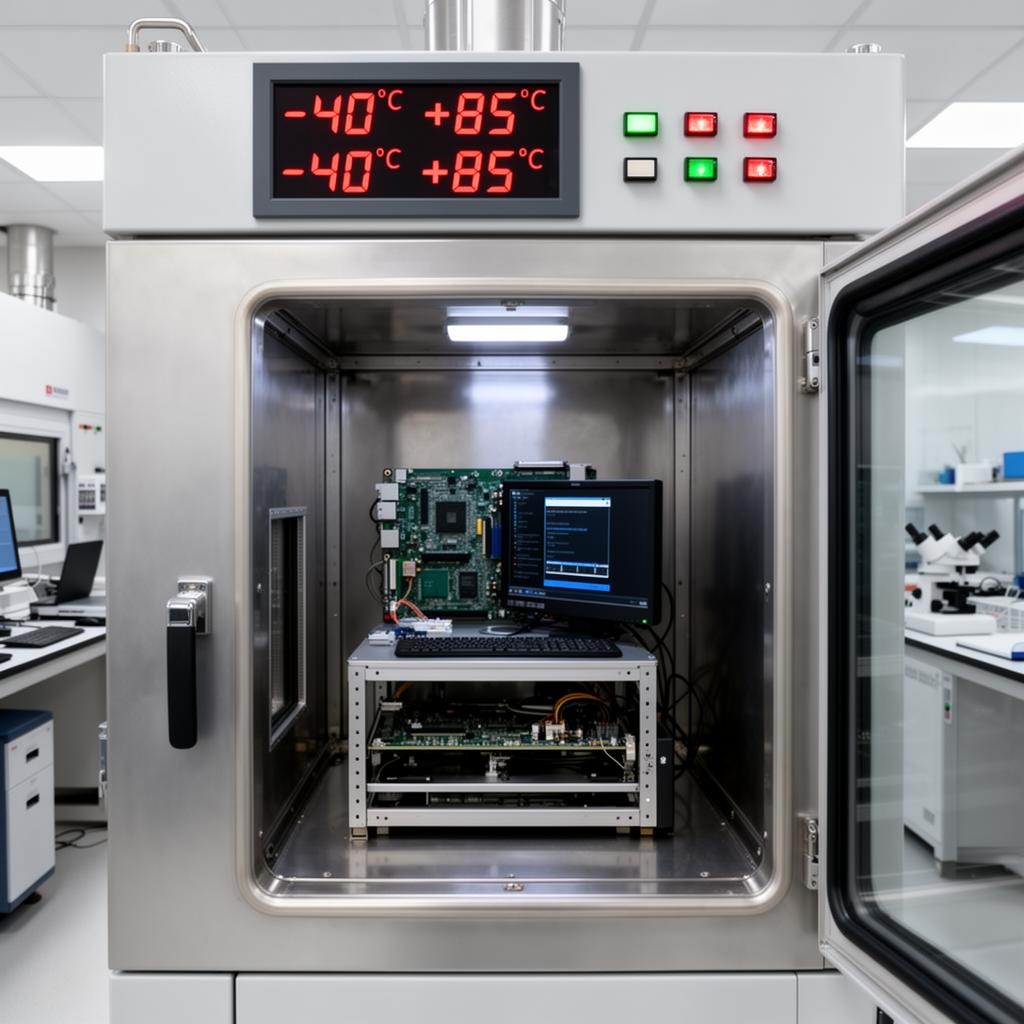
Thermal Stress Testing
Extreme Temperature Validation
Chamber testing from -40°C to +85°C. 72-hour continuous burn-in at 100% CPU/GPU load.
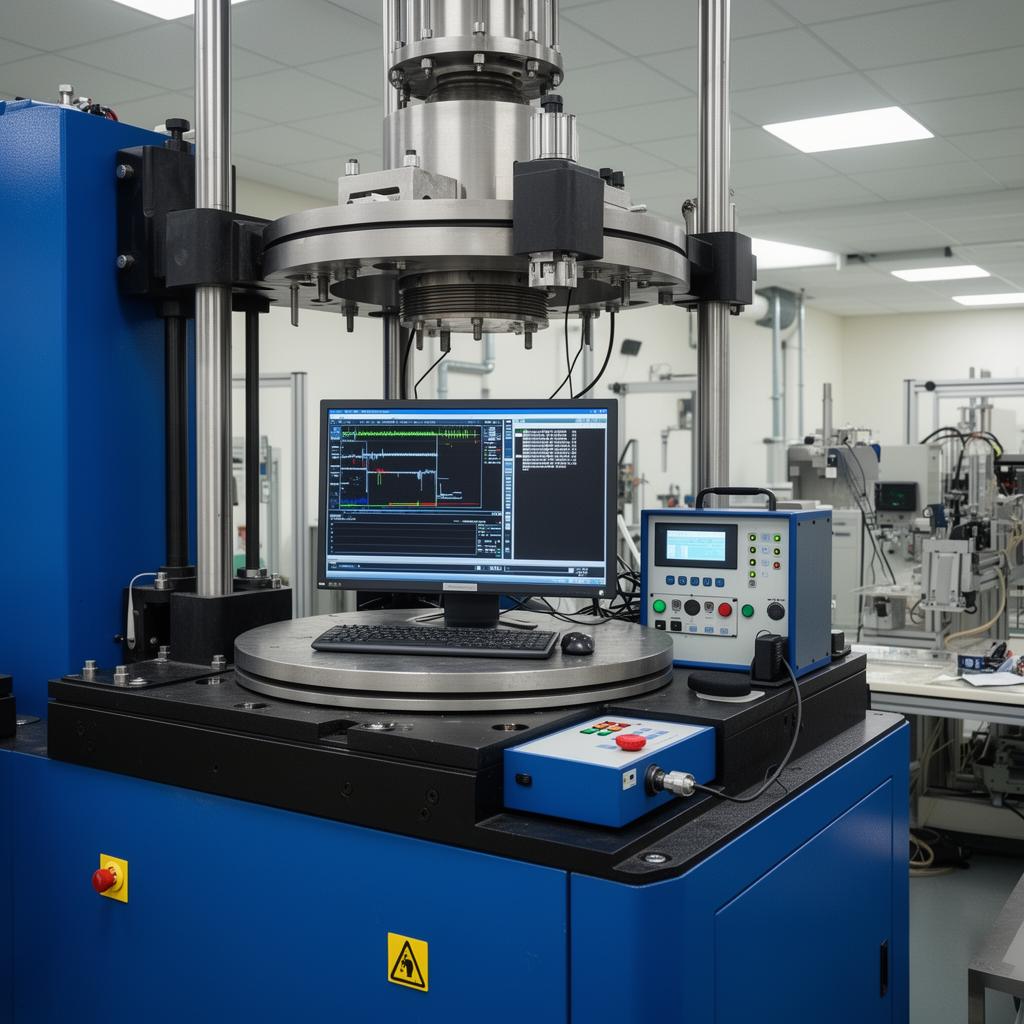
Mechanical Dynamics
Vibration & Shock Validation
3-axis random vibration and 50G peak shock testing simulates real-world transportation and deployment conditions.
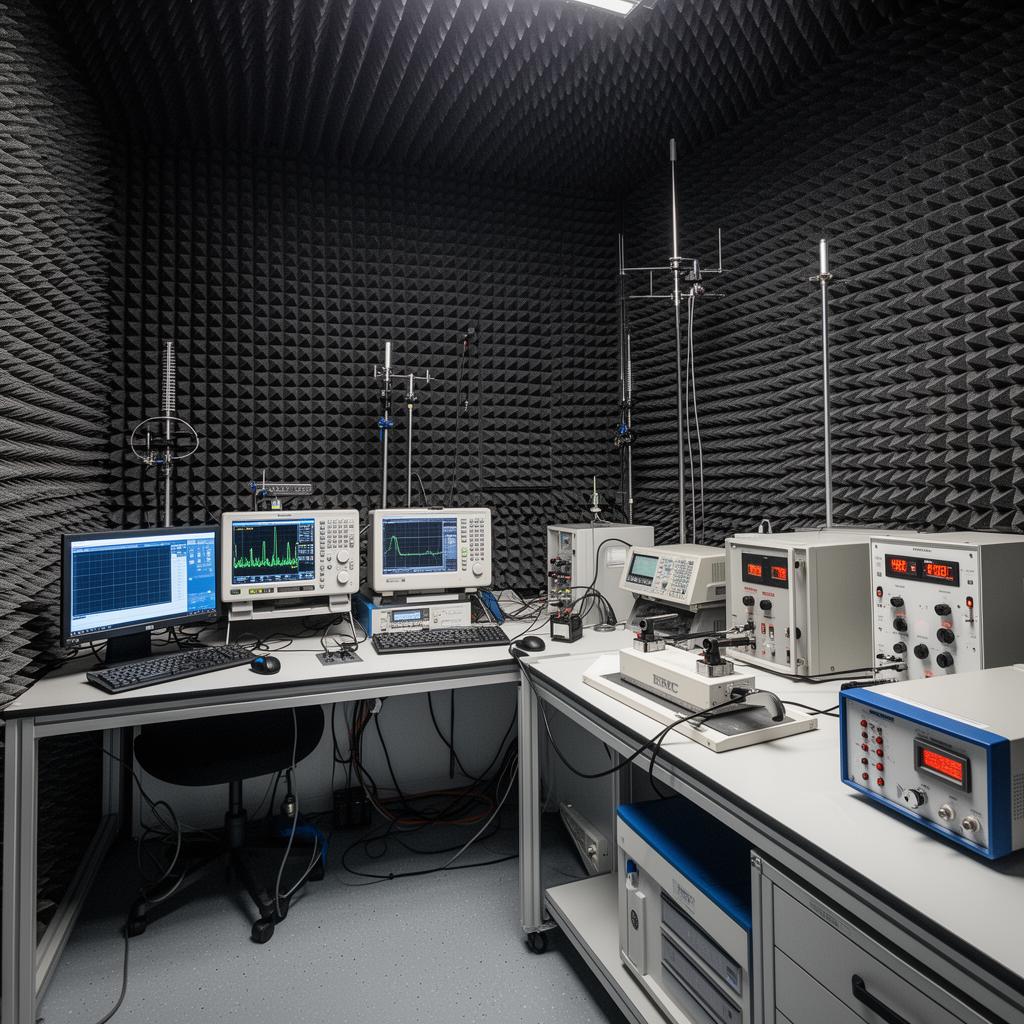
Electrical Safety & EMI
Surge, ESD & Burst Testing
In-house pre-compliance for Surge, ESD (15kV), and Burst testing ensures immunity in harsh industrial environments.
Validation Workflow
From initial simulation to volume production — a rigorous 4-stage validation process ensures design integrity.
Design Simulation
CFD & FEA Analysis
Computational Fluid Dynamics for thermal modeling and Finite Element Analysis for mechanical stress prediction before physical prototyping.
EVT Prototype
Engineering Verification Test
First functional prototypes undergo initial validation. Identifies design issues early in the development cycle.
DVT Lab Testing
Design Verification Test
Full environmental stress testing: thermal cycling, vibration, shock, EMC, and accelerated life testing in our validation lab.
Mass Production
Production Validation Test
100% burn-in testing, process capability verification, and ongoing quality monitoring with statistical process control.
Comprehensive Test Reports
Every platform undergoes documented validation with traceable test data. Reports include thermal imaging, vibration profiles, EMC pre-compliance results, and accelerated aging projections.
Thermal Imaging & CFD Correlation
Real vs. simulated thermal data comparison
Vibration PSD Plots
Power Spectral Density analysis per MIL-STD-810G
EMC Pre-Compliance Scan
Conducted & radiated emissions baseline
MTBF Projection
Accelerated life testing with Arrhenius modeling
Want to see the raw data?
Download a sanitized, full-length DVT Report for our RK3588 Edge AI series, featuring real thermal CFD correlations and vibration PSD plots.
Request Sample DVT ReportNeed Validation Support for Your Project?
Our engineering team can discuss testing requirements and validation strategies for your industrial computing deployment.
Contact Engineering Team