
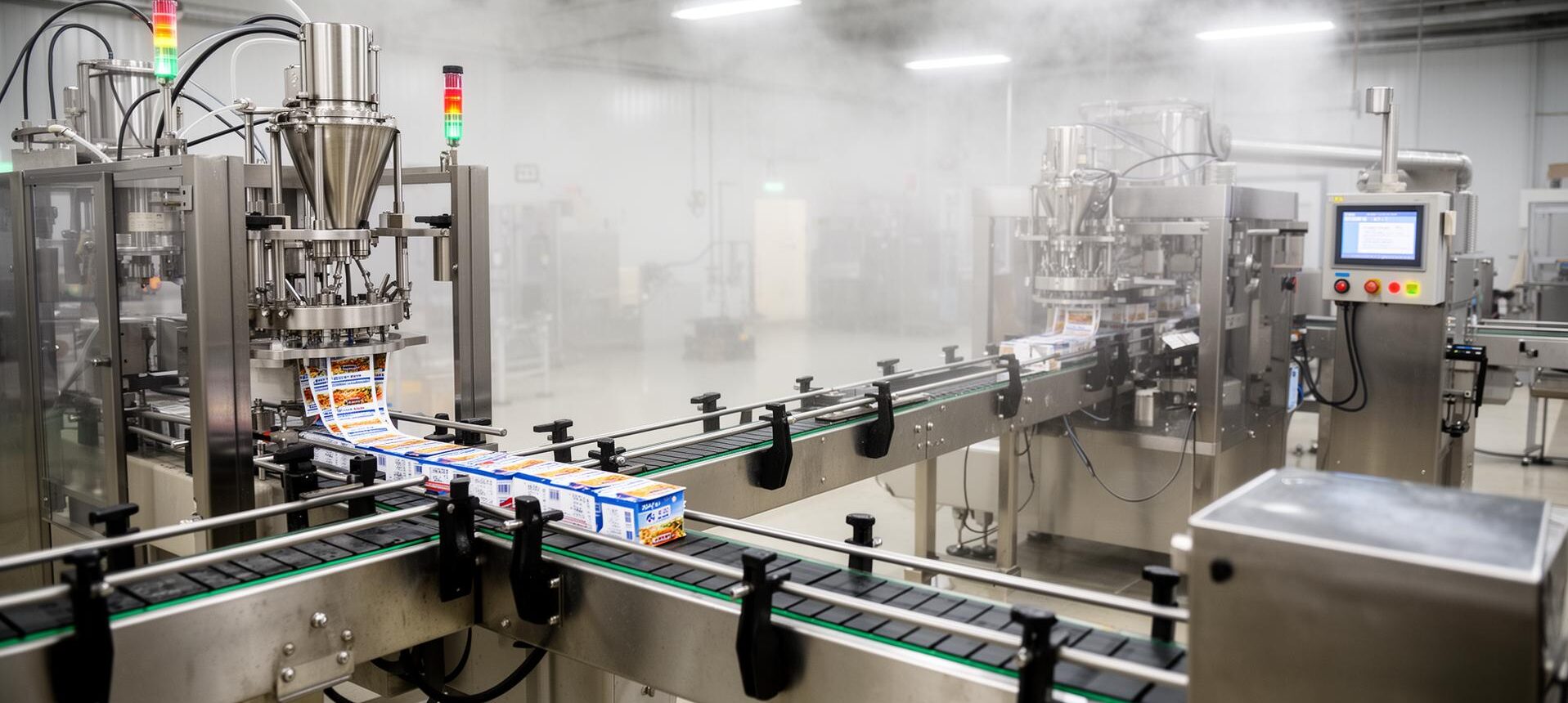
Food Processing Industrial Control Solution
Humidity-Proof IPC with Conformal Coating for 24/7 Washdown Lines
Food processing environments present unique challenges for industrial control systems. Constant exposure to high humidity, frequent washdown cycles, chemical cleaning agents, and temperature fluctuations accelerate the degradation of standard electronics. When a controller fails mid-production, the consequences extend far beyond equipment replacement—scrap accumulates, cleaning cycles restart, and traceability gaps emerge. This solution addresses the root cause: providing reliability-engineered IPC platforms with conformal-coated mainboards, designed specifically for the demanding conditions of 24/7 food and beverage production lines.
Reduced Moisture-Driven Failures
Conformal coating on mainboards protects against humidity, condensation, and chemical vapors—reducing the corrosion and oxidation that cause intermittent faults and premature failures.
Stable 24/7 Line Control
Designed for continuous operation with watchdog recovery, parameter backup, and stable power design. When faults occur, the system recovers automatically—minimizing intervention and line stoppages.
Faster Integration
Clear I/O mapping, flexible communication interfaces, and documented integration patterns for filling, capping, labeling, inspection, and reject coordination—accelerating commissioning and reducing integration risk.
Quick Input Checklist
The Cost of ‘Standard’ Electronics.
Food processing facilities operate in environments that are fundamentally hostile to standard electronics. High humidity levels—often exceeding 80%—are common in filling zones, washdown areas, and anywhere steam or water spray is present. This moisture doesn’t just sit on surfaces; it penetrates enclosures, condenses on circuit boards during temperature transitions, and creates conductive bridges between components that were never designed to be wet. The result is corrosion that builds invisibly over weeks or months until it causes a sudden, unexplained failure.
Chemical cleaning agents compound the problem. Sanitizing solutions, caustic cleaners, and even food residues create vapor environments that accelerate oxidation and attack solder joints, connector pins, and trace copper. The combination of humidity, chemicals, and temperature cycling during cleaning creates a particularly aggressive degradation cycle. Equipment that works fine after initial installation may fail repeatedly after a few months of production, with intermittent faults that are nearly impossible to diagnose because they cannot be reproduced in dry conditions.
Condensation is the most insidious failure mode. When cold-chain areas interface with warmer zones, or when equipment heats up during operation and cools during downtime, water droplets form directly on PCBs. These droplets create instant short circuits that may clear when the board heats up again—causing random faults that appear, disappear, and reappear without pattern. Maintenance teams often replace multiple components before identifying that the environment itself is the root cause.
“The real cost is not a controller failure—it’s downtime ripple effects: scrap, restart, re-cleaning, and traceability loss.”
Key Challenges
Moisture Ingress
Humidity and direct water exposure from washdown cycles penetrate standard enclosures and attack circuit boards. Connector pins corrode, trace copper oxidizes, and solder joints weaken. The damage accumulates gradually until connections become unstable, causing intermittent communication failures and unpredictable behavior that disrupts production schedules.
Condensation Faults
Temperature transitions—from cold-chain zones to ambient, or during cleaning cycles—cause condensation to form directly on electronic components. These micro-droplets create short circuits that clear when the board heats up, producing random faults that cannot be reproduced in the lab. Technicians often chase phantom problems while the real culprit remains undetected.
Chemical Degradation
Sanitizing agents, caustic cleaners, and food residue vapors create corrosive atmospheres that attack materials not designed for chemical exposure. Even equipment positioned away from direct cleaning may be affected by airborne chemicals. This degradation accelerates with each cleaning cycle, shortening equipment lifespan unpredictably. Mitigation requires project-specific protection strategies.
Continuous Production Pressure
24/7 food production lines have no tolerance for unplanned stops. A minor controller glitch during night shift can cascade into hours of downtime, product scrap, cleaning cycle restarts, and traceability gaps. Systems must not only be reliable but also recoverable—able to resume automatically after transient faults without requiring skilled operator intervention.
What This Means for Procurement
When evaluating industrial control systems for food processing environments, focus on reliability evidence and maintainability. Request information about conformal coating specifications, environmental testing, recovery mechanisms, and cabinet installation guidance. The lowest-cost controller may become the highest-cost choice when maintenance calls and production losses are factored in.
Need a line control recommendation?
Our engineers are ready to review your line specs. Get an expert opinion on your IPC and I/O architecture today.
Resilience by Design
Humidity-Resistant IPC Platform
Industrial PC platforms with conformal-coated mainboards, stable power design, and wide operating temperature support. Engineered for stability-first operation in environments where standard office or commercial computers fail within months. Includes watchdog recovery and parameter backup for automatic fault recovery.
Reliable I/O & Communications
Flexible communication interfaces for multi-device packaging lines: Ethernet for modern inspection equipment, serial for legacy devices, digital I/O for sensors and actuators. Optically isolated interfaces prevent ground loops and noise issues that cause erratic behavior in electrically noisy factory environments.
Quality Gate Integration
Coordinated integration of inspection devices (checkweigher, metal detector, X-ray) with reject mechanisms (air blast, pusher, diverter). The closed-loop “inspect → reject → log” architecture ensures defective products are removed precisely and every decision is recorded for traceability.
Data Logging & Traceability
Optional batch logging and traceability readiness on a project basis. Structure data for MES integration, regulatory compliance, and quality audits. Track batch IDs, inspection results, reject events, and environmental conditions to enable targeted recalls instead of factory-wide responses.
“This is a reliability-first control architecture for food factories—not a generic office PC.”
Conformal-Coated Mainboards for Corrosion Prevention
Conformal coating is a thin protective layer applied to circuit boards that shields components, traces, and solder joints from moisture, chemical vapors, and airborne contaminants. In food processing environments where humidity routinely exceeds 80% and cleaning chemicals create corrosive atmospheres, this coating provides a critical barrier that extends equipment lifespan and reduces intermittent failures caused by micro-corrosion.
The coating works by preventing condensation from forming conductive paths between components. When uncoated boards encounter humid air or temperature transitions, water droplets bridge traces and create short circuits that cause random faults. With conformal coating, the water may bead on the surface but cannot penetrate to create electrical problems. This dramatically reduces the “phantom fault” issues that plague food factories using standard electronics.
However, conformal coating is not a complete solution by itself. It protects the circuit board but does not replace proper enclosure design, cabinet placement, and cable gland sealing. A conformal-coated mainboard inside a poorly sealed cabinet exposed to direct washdown spray will still fail—just more slowly. The coating handles micro-moisture at the PCB level; the overall system design must handle macro-water at the installation level.
Where Conformal Coating Helps Most
Filling/Capping Wet Zones
High splash and humidity near liquid filling and capping stations
Frequent Washdown Areas
Zones cleaned daily or between batches with water and chemicals
Condensation-Prone Zones
Cold-chain transitions and temperature cycling areas
Closed-Loop Control Architecture
A robust, deterministic data flow from the factory floor to your enterprise systems, powered by our humidity-resistant industrial computing backbone.
1. Sensing & Vision
- • Proximity & Photo-eyes
- • Temp/RH Monitors
- • Checkweighers
- • X-Ray & Metal Detectors
2. BITECH Edge IPC
- ✔ Conformal Coated PCB
- ✔ Watchdog Auto-Recovery
- ✔ Optically Isolated I/O
- ✔ Real-Time Deterministic Logic
3. Actuation & Reject
- • Air Blast & Pushers
- • Diverter Gates
- • Robotic Case Packing
- • Filling & Capping Sync
4. Enterprise IT
- • SN-Binding & Traceability
- • Real-Time SPC Reports
- • SCADA / MES Integration
- • OPC-UA / MQTT Comms
Typical Signals & Measurements
Integration & Compliance
- ✔ Zero data silos (Direct MES mapping)
- ✔ Quality gate handshakes with confirm signals
- ✔ Automated FDA-ready regulatory reporting
- ✔ Isolated networks for factory floor security
Use Cases
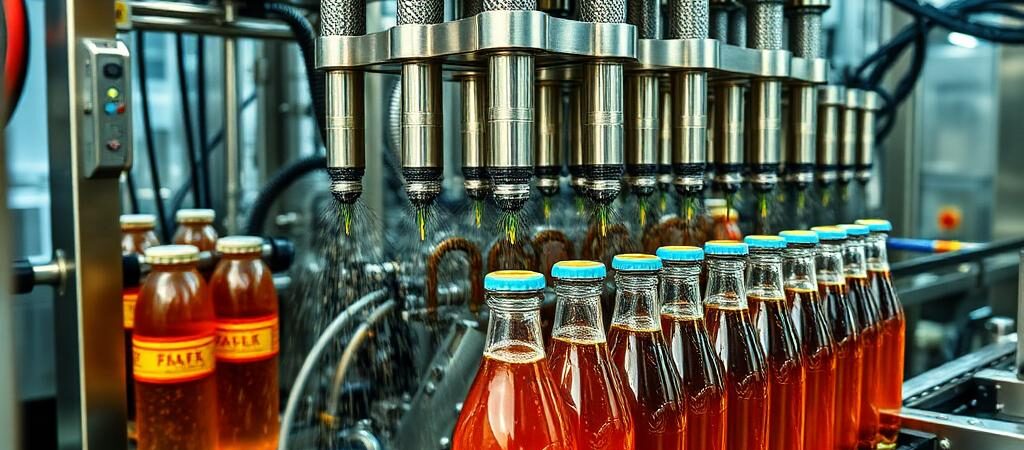
Beverage Filling & Capping (Wet Zone Uptime)
Beverage filling lines operate in some of the most challenging conditions for electronics. Liquid splashes during filling, condensation from refrigerated products, and steam from cleaning create persistent high-humidity environments. The filling and capping stations themselves generate spray and drips that can reach nearby control equipment. When a controller fails in this zone, production stops immediately—bottles pile up, liquid overflows, and the entire line requires cleaning before restart.
Common failure patterns include connector corrosion from repeated moisture exposure, communication dropouts when condensation forms on serial or Ethernet ports, and power supply degradation from the combination of humidity and electrical noise. These failures often appear intermittent initially—working in the morning, failing in the afternoon when humidity peaks—making diagnosis frustrating and time-consuming.
This solution reduces wet zone failures through conformal-coated mainboards that resist humidity and condensation at the PCB level. Combined with proper cabinet placement and sealing, the control system maintains stable operation through high-humidity conditions. Watchdog recovery ensures that transient faults—power glitches, software hangs—result in automatic restart rather than extended downtime waiting for operator intervention.
Best for: Beverage manufacturers, bottling OEMs, line integrators building wet-environment systems
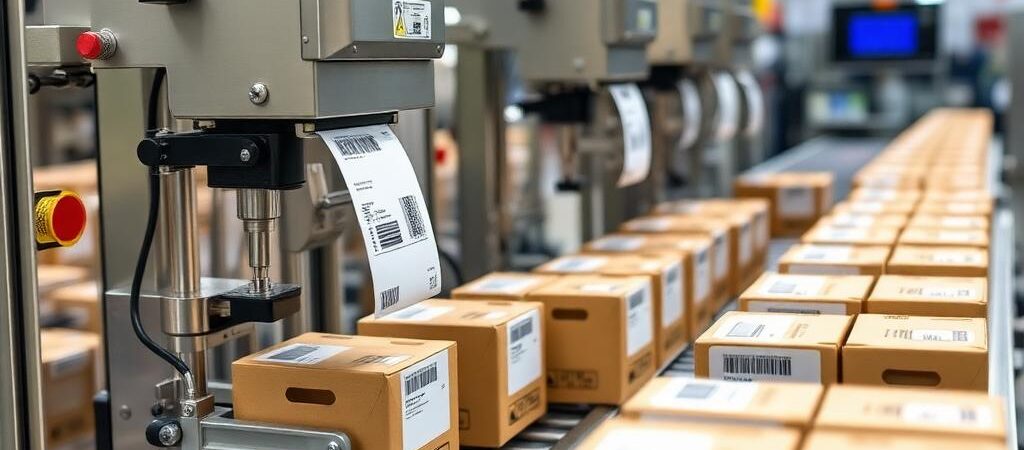
Labeling + Packaging (High-Speed Timing Sensitivity)
Labeling and packaging stations demand precise timing coordination. Label applicators must fire at exactly the right moment as products pass, carton folders must sequence correctly with product placement, and shrink-wrap machines must synchronize with conveyor speed. Timing errors measured in milliseconds result in misaligned labels, jammed cartons, or improperly sealed packages—all requiring line stops to clear and restart.
In humid environments, timing precision degrades as electrical noise increases and communication latency becomes variable. Ground loops between machines create signal interference, photo-eye sensors trigger erratically when condensation forms on lenses, and I/O modules develop contact resistance that causes missed or delayed signals. These issues compound at higher line speeds where timing margins are tighter.
Reliable I/O interfaces with optical isolation prevent ground loop issues and maintain consistent signal timing. The control system provides deterministic response for time-critical triggers while logging actual vs. expected timing to identify drift before it causes visible quality issues. Integration with vision systems enables verification that labels are correctly placed, flagging errors for correction rather than shipping defective products.
Best for: Contract packagers, consumer goods manufacturers, labeling equipment OEMs
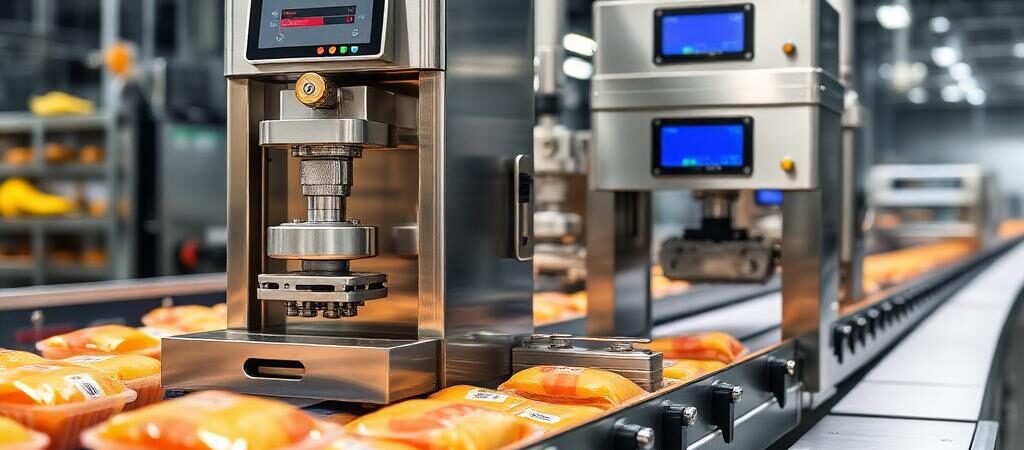
Checkweigher + Metal Detection + Reject (Quality Gate Closed Loop)
Quality gate stations combine inspection devices with reject mechanisms to ensure only conforming products proceed to final packaging. The checkweigher verifies product weight within tolerance, the metal detector identifies contamination, and X-ray systems detect foreign objects or missing components. When any inspection fails, a reject mechanism—air blast, pusher, or diverter—removes the defective product from the line. This must happen reliably, precisely, and with complete documentation for regulatory compliance.
The challenge is coordination. Each inspection device has different communication protocols and output formats. Reject timing must account for conveyor speed and the distance between detector and reject point. False rejects waste good product and slow throughput; missed rejects risk contaminated products reaching customers. In humid environments, sensor drift and communication errors increase the risk of both failure modes.
The solution integrates multiple inspection inputs through a unified control architecture that calculates reject timing based on actual conveyor speed, triggers the appropriate reject actuator, and confirms the rejection occurred. Every event is logged: inspection result, reject trigger, confirmation signal. This creates an audit trail proving that every product was inspected and every defect was addressed—essential for food safety compliance and customer quality audits.
Best for: Food manufacturers with regulatory inspection requirements, quality managers, safety compliance teams
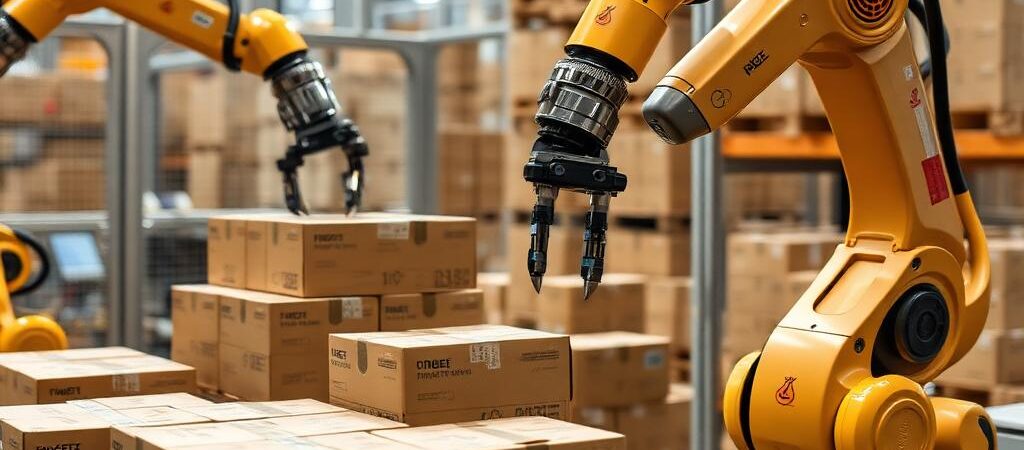
Case Packing + Palletizing Robotics (Multi-Device Coordination)
End-of-line case packing and palletizing combines conveyors, collating mechanisms, case erectors, robotic pick-and-place, and pallet handling into a coordinated system. Products must accumulate in correct patterns, cases must be ready at the right time, robots must pick and place without collision, and pallets must be positioned for loading. Any breakdown in coordination stops the entire downstream flow, backing up upstream packaging lines.
Robotics integration adds complexity because robot controllers operate independently with their own motion planning and safety systems. The line controller must communicate product presence, pattern completion, and case availability while the robot controller manages pick sequences and place positions. Communication delays or drops cause the robot to wait unnecessarily or pick when products aren’t ready, reducing throughput and potentially damaging products.
Multi-device coordination through a unified control architecture ensures all components operate in sync. The IPC manages handshakes between robot controllers and packaging equipment, tracks case counts and pallet patterns, and maintains throughput even when individual stations pause for changeover or fault recovery. Optional data logging tracks picks per hour, cycle times, and fault frequencies to identify optimization opportunities.
Best for: Fulfillment centers, beverage distributors, robotics integrators, packaging line builders
Reliability Checklist
“In food automation, recoverability often matters more than peak performance.”
Recommended Bundles
Basic Line Control
Standard packaging line control for conveyors, sensors, and basic packaging equipment coordination. Conformal-coated IPC with essential I/O for smaller lines or initial deployments. Suitable for lines without complex inspection or robotics integration.
- Conformal-coated platform
- Conveyor & sensor I/O
- Standard packaging control
Inspection + Reject + Traceability
Full quality gate integration with checkweigher, metal detector, and reject coordination. Includes traceability logging for batch/lot tracking and inspection result archiving. The most common configuration for food manufacturers with regulatory compliance requirements.
- Everything in Entry
- Quality gate integration
- Traceability logging
Robotics + Multi-Station
Complete end-of-line automation including case packing robotics, multi-station coordination, and optional remote maintenance capability. For complex lines with multiple packaging zones, robotic handling, and enterprise integration needs.
- Everything in Standard
- Robotics integration
- Remote maintenance (optional)
Note: Final configuration is based on your line architecture and I/O requirements. Bundles serve as starting points for discussion.
What You Will Receive
IPC Selection Proposal
Hardware recommendation matched to your humidity, temperature, and I/O requirements
I/O & Interface Checklist
Complete mapping of sensors, actuators, and communication interfaces
Cabinet & Installation Guidance
Recommendations for cabinet placement, sealing, and ventilation to reduce moisture risk
Quality Gate Integration Outline
Architecture for inspect → reject → log closed-loop control
Batch Logging Structure (Optional)
Data schema for traceability and regulatory compliance
Commissioning Checklist
Step-by-step verification and troubleshooting workflow
SCADA/MES Integration Outline (Optional)
Interface specification for enterprise system connectivity
Remote Diagnostics Approach (Optional)
Secure remote access strategy for maintenance support